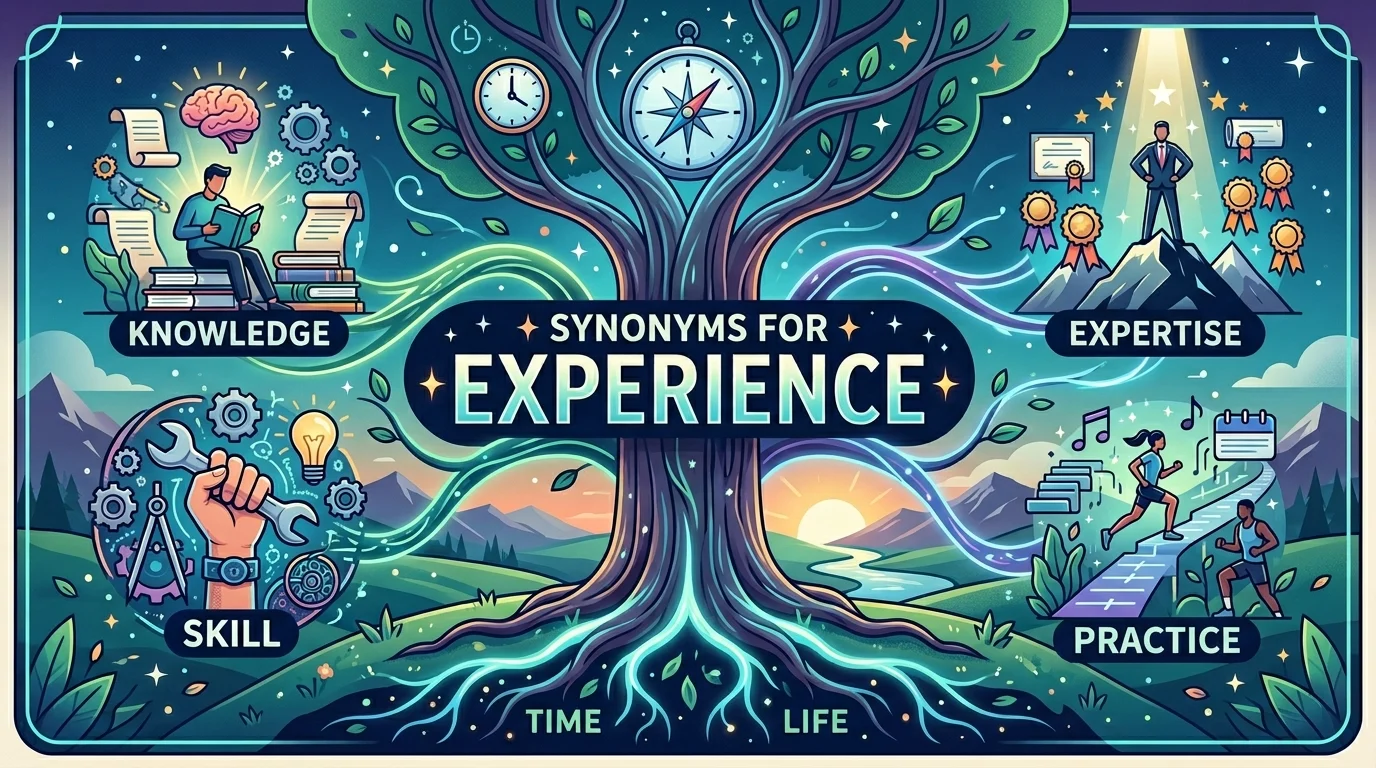
Have you ever wanted to use a better word than experience in your writing but couldn’t find the right alternative? Many students, job seekers, bloggers, and professionals face this challenge. Using the same word repeatedly can make your writing sound repetitive and less engaging.
In simple terms, experience refers to the knowledge, skills, understanding, or familiarity gained through doing, seeing, or learning something. It is commonly used in academic writing, professional communication, resume writing, and everyday conversations.
Learning synonyms for experience can help improve your vocabulary, strengthen your communication skills, and make your writing more professional and effective.
What Does Experience Mean? Quick Answer
Experience refers to the knowledge, skills, understanding, and awareness that a person gains through work, education, training, observation, or personal involvement. Experience plays an important role in career development, professional writing, workplace communication, and personal growth.
50 Synonyms for Experience
1. Knowledge
Meaning:
Information and understanding gained through learning or experience.
Examples:
- Her knowledge of history is impressive.
- He gained valuable knowledge during the project.
2. Expertise
Meaning:
Specialized skill or knowledge in a particular field.
Examples:
- She has expertise in digital marketing.
- His expertise helped solve the problem.
3. Skill
Meaning:
The ability to do something well.
Examples:
- Writing is an important skill.
- She improved her communication skills.
4. Practice
Meaning:
Repeated performance to improve ability.
Examples:
- Practice makes perfect.
- Daily practice improved his performance.
5. Exposure
Meaning:
Contact with or involvement in something that increases knowledge.
Examples:
- International travel provided valuable exposure.
- Students gained exposure to new ideas.
6. Familiarity
Meaning:
Knowledge gained from previous contact or experience.
Examples:
- Her familiarity with the software was helpful.
- Familiarity with the topic improved confidence.
7. Understanding
Meaning:
Knowledge about how something works.
Examples:
- He has a deep understanding of economics.
- The course improved my understanding.
8. Insight
Meaning:
A clear understanding of a situation.
Examples:
- Her insight helped the team.
- The report provided useful insights.
9. Background
Meaning:
A person’s education, training, or past experience.
Examples:
- He has a strong business background.
- Her academic background supports her career.
10. Competence
Meaning:
The ability to perform effectively.
Examples:
- The job requires technical competence.
- She demonstrated professional competence.
11. Proficiency
Meaning:
A high level of skill or ability.
Examples:
- He achieved proficiency in English.
- Proficiency comes with practice.
12. Capability
Meaning:
The ability to perform a task successfully.
Examples:
- She showed leadership capability.
- The team has the capability to succeed.
13. Accomplishment
Meaning:
Something achieved through effort and experience.
Examples:
- Graduating was a major accomplishment.
- The award recognized his accomplishments.
14. Involvement
Meaning:
Active participation in an activity.
Examples:
- Community involvement builds confidence.
- His involvement improved the project.
15. Participation
Meaning:
Taking part in an activity or event.
Examples:
- Student participation was excellent.
- Participation helped develop new skills.
16. Training
Meaning:
Learning and practice designed to improve skills.
Examples:
- The company provides training programs.
- Training increased employee performance.
17. Know-How
Meaning:
Practical knowledge of how to do something.
Examples:
- She has the know-how to manage the project.
- Technical know-how is valuable.
18. Wisdom
Meaning:
Good judgment developed through experience.
Examples:
- Age often brings wisdom.
- Her wisdom guided the team.
19. Mastery
Meaning:
Complete skill or knowledge of a subject.
Examples:
- Mastery requires dedication.
- He achieved mastery of the language.
20. Awareness
Meaning:
Knowledge or understanding of a situation.
Examples:
- The campaign raised awareness.
- Environmental awareness is important.
21. Qualification
Meaning:
A skill, achievement, or certification that prepares someone for a role.
Examples:
- She has the qualifications for the position.
- Additional qualifications improved his prospects.
22. Learning
Meaning:
Knowledge gained through study or experience.
Examples:
- Learning is a lifelong process.
- Every project offers new learning.
23. Education
Meaning:
The process of gaining knowledge and skills.
Examples:
- Education opens opportunities.
- She values higher education.
24. Development
Meaning:
Growth in skills, knowledge, or ability.
Examples:
- Professional development is important.
- The course supported career development.
25. Growth
Meaning:
Improvement gained over time.
Examples:
- Personal growth comes from challenges.
- The experience encouraged growth.
26. Work Experience
Meaning:
Experience gained through employment.
Examples:
- Work experience strengthens a resume.
- Employers value relevant work experience.
27. Professional Background
Meaning:
A person’s career history and expertise.
Examples:
- She has a strong professional background.
- His professional background impressed recruiters.
28. Employment History
Meaning:
A record of previous jobs and roles.
Examples:
- The application requested employment history.
- His employment history showed steady progress.
29. Career History
Meaning:
The collection of a person’s professional experiences.
Examples:
- Her career history includes management roles.
- Recruiters reviewed his career history.
30. Industry Experience
Meaning:
Experience gained within a specific field.
Examples:
- Industry experience is often required.
- She has years of industry experience.
31. Practical Knowledge
Meaning:
Knowledge gained through real-world application.
Examples:
- Internships provide practical knowledge.
- Practical knowledge complements education.
32. Hands-On Experience
Meaning:
Direct involvement in performing tasks.
Examples:
- The internship provided hands-on experience.
- Employers value hands-on experience.
33. Real-World Experience
Meaning:
Experience gained outside of theoretical learning.
Examples:
- Real-world experience builds confidence.
- Students benefit from real-world experience.
34. Exposure to Work
Meaning:
Contact with professional environments.
Examples:
- The program offered exposure to work settings.
- Early exposure to work is beneficial.
35. Expertise Level
Meaning:
The degree of skill or knowledge a person possesses.
Examples:
- Her expertise level is advanced.
- The role requires a high expertise level.
36. Competency
Meaning:
The ability to perform a task effectively.
Examples:
- Communication competency is essential.
- Employees demonstrated competency.
37. Ability
Meaning:
The power or skill to do something.
Examples:
- She has the ability to lead.
- His ability improved with practice.
38. Talent
Meaning:
A natural aptitude or skill.
Examples:
- She has a talent for writing.
- His talent impressed everyone.
39. Aptitude
Meaning:
A natural ability to learn or perform.
Examples:
- He showed aptitude for science.
- Aptitude helps people learn quickly.
40. Seasoning
Meaning:
Maturity and skill gained through long experience.
Examples:
- The manager’s seasoning was evident.
- Years of work brought professional seasoning.
41. Acquaintance
Meaning:
Basic knowledge of a subject.
Examples:
- She has some acquaintance with coding.
- My acquaintance with the topic is limited.
42. Perception
Meaning:
Understanding gained from experience or observation.
Examples:
- Travel improved his perception of cultures.
- Her perception helped avoid mistakes.
43. Perspective
Meaning:
A particular way of viewing something.
Examples:
- Experience provides perspective.
- The project changed my perspective.
44. Observation
Meaning:
Knowledge gained through watching and learning.
Examples:
- Observation improved his skills.
- Scientists rely on observation.
45. Exposure to Learning
Meaning:
Opportunities to gain knowledge and understanding.
Examples:
- The program increased exposure to learning.
- Students benefited from additional exposure.
46. Professional Practice
Meaning:
Practical work performed within a profession.
Examples:
- Professional practice builds competence.
- Experience grows through professional practice.
47. Fieldwork
Meaning:
Practical work carried out outside a classroom or office.
Examples:
- Fieldwork provided valuable experience.
- Researchers completed fieldwork abroad.
48. Apprenticeship
Meaning:
Training under an experienced professional.
Examples:
- He completed an apprenticeship.
- Apprenticeships provide practical skills.
49. Mentorship
Meaning:
Learning through guidance from an experienced person.
Examples:
- Mentorship accelerated her growth.
- The program included mentorship opportunities.
50. Life Experience
Meaning:
Knowledge and wisdom gained through living and personal growth.
Examples:
- Life experience teaches valuable lessons.
- His life experience shaped his decisions.
Formal Synonyms for Experience
When writing essays, reports, research papers, or business documents, consider using:
- Expertise
- Proficiency
- Competence
- Qualification
- Mastery
- Professional Background
- Industry Experience
- Practical Knowledge
Professional Synonyms for Experience
In business communication, resumes, and job interviews, these alternatives are commonly used:
- Work Experience
- Employment History
- Career History
- Professional Background
- Industry Experience
- Competency
- Expertise
- Know-How
Academic Synonyms for Experience
Students and researchers often use:
- Knowledge
- Understanding
- Learning
- Exposure
- Awareness
- Insight
- Education
Resume and CV Synonyms for Experience
If you’re writing a resume or CV, consider replacing experience with:
- Professional Background
- Employment History
- Career History
- Industry Experience
- Practical Knowledge
- Hands-On Experience
- Expertise
- Qualifications
Experience vs Expertise
| Experience | Expertise |
|---|---|
| Time spent doing something | High level of specialized skill |
| Can be broad | Usually focused on one field |
| Gained through participation | Gained through mastery and practice |
Experience vs Knowledge
| Experience | Knowledge |
|---|---|
| Learned through doing | Learned through study or information |
| Practical | Theoretical or practical |
| Often involves real situations | May come from books or education |
Experience vs Skill
| Experience | Skill |
|---|---|
| What you have done | What you can do |
| Built over time | Ability to perform a task |
| Often leads to skills | May develop through experience |
How to Use Experience Synonyms in Sentences
- Her expertise helped improve the project.
- The internship provided hands-on experience.
- Training increased professional competence.
- Industry experience is valuable in this role.
- The course expanded my knowledge and understanding.
- Practical knowledge helped solve the problem.
Common Mistakes When Using Experience Synonyms
Confusing Experience with Expertise
Not everyone with experience is an expert. Expertise suggests advanced knowledge and mastery.
Using Knowledge Instead of Experience
Knowledge may come from books, while experience is usually gained through practical involvement.
Using Skill as a Direct Replacement
A skill is an ability, while experience is the process of gaining that ability over time.
FAQs
What is another word for experience?
Common alternatives include knowledge, expertise, skill, familiarity, insight, proficiency, and practical knowledge.
What is the best professional synonym for experience?
Professional background, industry experience, expertise, and work experience are widely used in professional writing.
What is a good synonym for experience on a resume?
Professional background, employment history, career history, and hands-on experience are excellent options.
What is the difference between experience and expertise?
Experience refers to time spent learning or doing something, while expertise refers to a high level of specialized skill.
Which synonym is best for academic writing?
Knowledge, understanding, insight, awareness, and learning are commonly used in academic writing.
Conclusion
Learning synonyms for experience helps improve vocabulary, writing quality, and communication skills.
Whether you are writing a resume, preparing for a job interview, completing academic writing, or improving professional communication, using a variety of alternatives can make your language more precise and engaging.
By understanding the differences between experience, expertise, knowledge, and skill, you can choose the most appropriate word for every situation.
Related Posts:
- Synonyms of Discussion – 50 Better Ways To Say Discussion in 2026
- Synonyms for Sad: Meaning, Alternatives, Usage, and Examples