Smug means being overly pleased with yourself, showing excessive self-satisfaction, or acting as though you’re better than others.
After winning the school debate competition, Ethan couldn’t stop talking about his success. He wore a smug smile, kept reminding everyone that he had won, and acted as if no one else could match his abilities. While it’s perfectly fine to feel proud of an achievement, Ethan’s attitude crossed the line from confidence to arrogance. His classmates described him as smug, conceited, and self-satisfied rather than simply confident.
The word smug is commonly used in conversations, novels, reviews, workplace discussions, and everyday English to describe someone who appears overly pleased with themselves or behaves with an air of superiority. Because it often carries a negative connotation, choosing the right synonym depends on the context. Learning synonyms for smug will help students, writers, bloggers, professionals, and English learners improve their English vocabulary, descriptive writing, communication skills, and word choice while avoiding repetitive language.
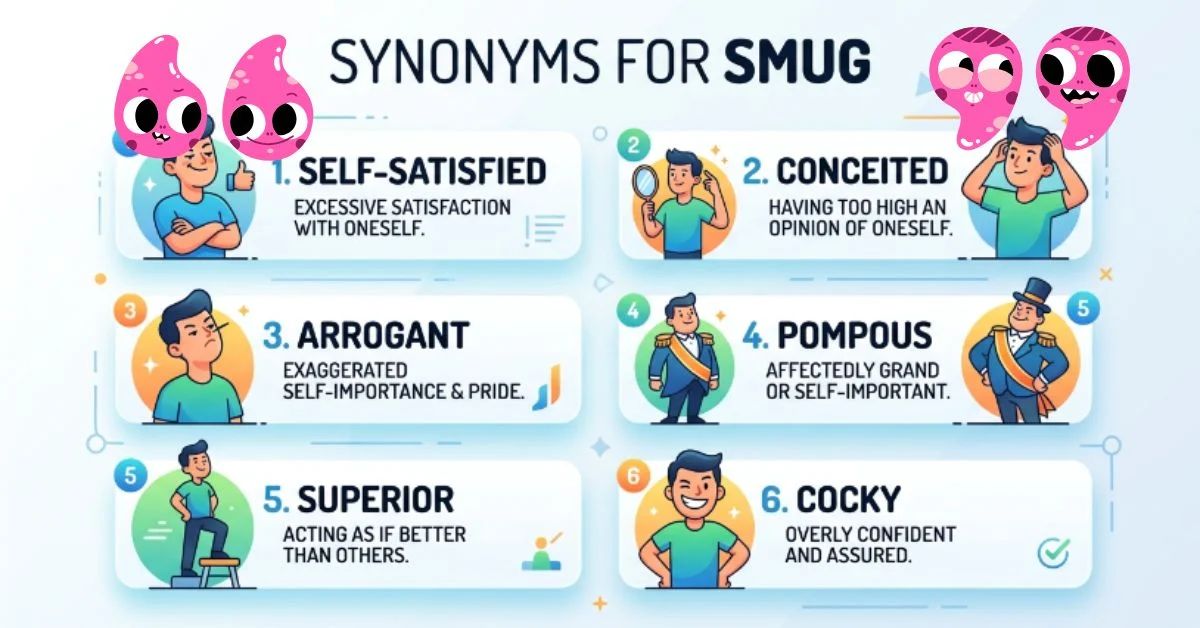
1. Self-Satisfied
Meaning: Feeling excessively pleased with yourself.
Examples:
- He looked self-satisfied after winning the argument.
- She wore a self-satisfied smile.
2. Conceited
Meaning: Having an exaggerated opinion of yourself.
Examples:
- He became conceited after his success.
- Nobody likes a conceited teammate.
3. Arrogant
Meaning: Acting as though you are better than others.
Examples:
- The manager sounded arrogant.
- His arrogant attitude upset everyone.
4. Cocky
Meaning: Overly confident in an annoying way.
Examples:
- The athlete sounded cocky before the match.
- Don’t become cocky after one victory.
5. Overconfident
Meaning: Too confident in your abilities.
Examples:
- She became overconfident before the exam.
- His overconfident approach caused mistakes.
6. Pompous
Meaning: Acting in a self-important way.
Examples:
- His pompous speech bored the audience.
- She disliked his pompous manner.
7. Egotistical
Meaning: Thinking mostly about yourself.
Examples:
- He sounded egotistical during the interview.
- The character was egotistical and selfish.
8. Egotistic
Meaning: Excessively focused on yourself.
Examples:
- She seemed egotistic in meetings.
- His egotistic remarks annoyed everyone.
9. Narcissistic
Meaning: Having excessive admiration for yourself.
Examples:
- The novel describes a narcissistic leader.
- His narcissistic behavior damaged friendships.
10. Vain
Meaning: Too proud of your appearance or abilities.
Examples:
- He spent hours admiring himself.
- She was too vain to accept criticism.
11. Self-Important
Meaning: Believing you are more important than others.
Examples:
- He acted self-important during the meeting.
- Her self-important attitude frustrated the team.
12. Prideful
Meaning: Showing excessive pride.
Examples:
- His prideful behavior created conflict.
- She became prideful after the promotion.
13. Boastful
Meaning: Always talking proudly about yourself.
Examples:
- He was boastful about his achievements.
- Her boastful comments annoyed everyone.
14. Big-Headed
Meaning: Informal term for being overly proud.
Examples:
- Winning made him big-headed.
- Don’t become big-headed after success.
15. Swollen-Headed
Meaning: Having too much pride in yourself.
Examples:
- The award made him swollen-headed.
- She avoided becoming swollen-headed.
16. Full of Oneself
Meaning: Thinking very highly of yourself.
Examples:
- He is completely full of himself.
- She sounded full of herself during the interview.
17. High and Mighty
Meaning: Acting superior to everyone else.
Examples:
- Stop acting high and mighty.
- He speaks in a high-and-mighty tone.
18. Know-It-All
Meaning: Someone who acts as if they know everything.
Examples:
- Nobody likes a know-it-all.
- He behaves like a know-it-all.
19. Pretentious
Meaning: Trying to appear more important or intelligent than you are.
Examples:
- His pretentious language confused everyone.
- The review called the film pretentious.
20. Self-Righteous
Meaning: Believing you are morally superior.
Examples:
- She sounded self-righteous during the debate.
- His self-righteous attitude caused arguments.
21. Sanctimonious
Meaning: Pretending to be morally better than others.
Examples:
- His sanctimonious speech annoyed listeners.
- She dislikes sanctimonious advice.
22. Smarmy
Meaning: Fake, flattering, and overly self-confident.
Examples:
- The salesman sounded smarmy.
- His smarmy smile felt insincere.
23. Complacent
Meaning: Too satisfied with yourself to improve.
Examples:
- Success made the team complacent.
- Don’t become complacent after one achievement.
24. Overbearing
Meaning: Too controlling and self-important.
Examples:
- His overbearing personality upset coworkers.
- She dislikes overbearing managers.
25. Domineering
Meaning: Trying to control others in an arrogant way.
Examples:
- He has a domineering attitude.
- Her domineering behavior pushed people away.
26. Condescending
Meaning: Treating others as less intelligent.
Examples:
- His condescending tone was offensive.
- Don’t sound condescending.
27. Patronizing
Meaning: Appearing kind while treating others as inferior.
Examples:
- She found his comments patronizing.
- Stop using a patronizing tone.
28. Haughty
Meaning: Proud and looking down on others.
Examples:
- The prince appeared haughty.
- Her haughty expression discouraged conversation.
29. Snobbish
Meaning: Believing you’re better because of wealth or status.
Examples:
- His snobbish behavior upset classmates.
- She dislikes snobbish people.
30. Superior
Meaning: Acting as though you’re above everyone else.
Examples:
- He spoke with a superior attitude.
- Her superior expression annoyed the team.
31. Disdainful
Meaning: Showing disrespect because you think others are beneath you.
Examples:
- He gave a disdainful look.
- Her disdainful smile hurt his feelings.
32. Proud
Meaning: Feeling pleased with yourself (can be positive or negative).
Examples:
- She felt proud of her work.
- He looked proud after winning.
33. Self-Assured
Meaning: Confident in yourself.
Examples:
- She remained self-assured during the interview.
- He appeared self-assured on stage.
34. Self-Admiring
Meaning: Constantly admiring yourself.
Examples:
- He seemed self-admiring.
- Her self-admiring attitude became obvious.
35. Self-Congratulatory
Meaning: Praising yourself excessively.
Examples:
- His speech sounded self-congratulatory.
- She avoided a self-congratulatory tone.
36. Self-Centered
Meaning: Caring mostly about yourself.
Examples:
- He’s too self-centered to listen.
- Her self-centered behavior caused problems.
37. Egocentric
Meaning: Thinking mainly about yourself.
Examples:
- Children can sometimes seem egocentric.
- The character is egocentric.
38. Self-Absorbed
Meaning: Completely focused on yourself.
Examples:
- He became self-absorbed after becoming famous.
- She seemed too self-absorbed to notice others.
39. Self-Obsessed
Meaning: Extremely interested in yourself.
Examples:
- Social media made him self-obsessed.
- She appeared self-obsessed in the interview.
40. Superior-Minded
Meaning: Believing your opinions are better than everyone else’s.
Examples:
- He has a superior-minded attitude.
- Her superior-minded comments offended the group.
41. Imperious
Meaning: Arrogantly commanding and expecting obedience.
Examples:
- The CEO spoke in an imperious tone.
- Her imperious attitude intimidated the staff.
42. Lordly
Meaning: Behaving as though you are more important than others.
Examples:
- He gave a lordly smile.
- She adopted a lordly manner.
43. Superior-Acting
Meaning: Behaving as if you are above everyone else.
Examples:
- His superior-acting attitude annoyed the team.
- She avoided sounding superior-acting.
44. Egoistic
Meaning: Thinking mainly about your own importance.
Examples:
- His egoistic behavior damaged friendships.
- She seemed egoistic during the discussion.
45. Self-Loving
Meaning: Having excessive love or admiration for yourself.
Examples:
- The character was self-loving and proud.
- His self-loving nature was obvious.
46. Self-Obsessed
Meaning: Thinking about yourself all the time.
Examples:
- She became self-obsessed after becoming famous.
- His self-obsessed behavior frustrated everyone.
47. Self-Indulgent
Meaning: Allowing yourself too much pleasure or admiration.
Examples:
- His self-indulgent lifestyle attracted criticism.
- The article criticized her self-indulgent attitude.
48. Vainglorious
Meaning: Excessively proud of your achievements.
Examples:
- The king was portrayed as vainglorious.
- His vainglorious speech impressed no one.
49. Swaggering
Meaning: Showing excessive confidence in an arrogant way.
Examples:
- He walked in with a swaggering attitude.
- The player sounded swaggering after the win.
50. Puffy
Meaning: Informal term for acting overly proud.
Examples:
- He became puffy after the promotion.
- Don’t get puffy over small successes.
51. Puffy-Chested
Meaning: Acting proudly after success.
Examples:
- The winner looked puffy-chested.
- He became puffy-chested after the praise.
52. Smirking
Meaning: Smiling in a smug or self-satisfied way.
Examples:
- He gave a smirking reply.
- She walked away smirking.
53. Triumphant
Meaning: Feeling proud because of success.
Examples:
- He wore a triumphant grin.
- She looked triumphant after winning.
54. Pleased With Oneself
Meaning: Feeling very satisfied with yourself.
Examples:
- He looked pleased with himself.
- She seemed pleased with herself.
55. Self-Approving
Meaning: Showing approval of yourself.
Examples:
- His self-approving smile was obvious.
- She sounded self-approving.
56. Self-Praising
Meaning: Frequently praising yourself.
Examples:
- The interview became self-praising.
- His speech was self-praising.
57. Opinionated
Meaning: Strongly believing your opinions are always right.
Examples:
- He’s very opinionated.
- Her opinionated nature caused debates.
58. Dogmatic
Meaning: Insisting your views are unquestionably correct.
Examples:
- The professor sounded dogmatic.
- His dogmatic attitude discouraged discussion.
59. Overproud
Meaning: Excessively proud.
Examples:
- Don’t become overproud after success.
- He appeared overproud.
60. Self-Glorifying
Meaning: Constantly praising your own achievements.
Examples:
- The article felt self-glorifying.
- His speech became self-glorifying.
61. Vanity-Filled
Meaning: Full of excessive pride.
Examples:
- His vanity-filled attitude was obvious.
- She disliked his vanity-filled behavior.
62. Prideful-Minded
Meaning: Always thinking proudly about yourself.
Examples:
- He became prideful-minded.
- Her prideful-minded attitude caused tension.
63. Self-Elevating
Meaning: Trying to make yourself seem superior.
Examples:
- His comments sounded self-elevating.
- She avoided self-elevating language.
64. Superior-Feeling
Meaning: Feeling better than other people.
Examples:
- He had a superior-feeling attitude.
- She disliked his superior-feeling remarks.
65. Aloof
Meaning: Emotionally distant because you think you’re above others.
Examples:
- He remained aloof throughout the meeting.
- Her aloof behavior seemed unfriendly.
66. Dismissive
Meaning: Showing little respect for others’ opinions.
Examples:
- He gave a dismissive response.
- Her dismissive tone upset the audience.
67. Scornful
Meaning: Showing open disrespect.
Examples:
- She gave him a scornful look.
- His scornful remarks caused arguments.
68. Derisive
Meaning: Expressing ridicule or mockery.
Examples:
- His derisive laugh embarrassed her.
- She made a derisive comment.
69. Contemptuous
Meaning: Showing strong dislike mixed with disrespect.
Examples:
- He spoke in a contemptuous tone.
- She gave a contemptuous glance.
70. Disrespectful
Meaning: Showing a lack of respect.
Examples:
- His disrespectful comments offended everyone.
- She found the response disrespectful.
71. Insolent
Meaning: Rudely arrogant.
Examples:
- The student gave an insolent reply.
- His insolent behavior shocked the teacher.
72. Cheeky
Meaning: Rudely confident in a playful way.
Examples:
- He gave a cheeky grin.
- Her cheeky comment made everyone laugh.
73. Brash
Meaning: Confident in an overly bold way.
Examples:
- He made a brash prediction.
- Her brash attitude surprised everyone.
74. Bold
Meaning: Fearlessly confident.
Examples:
- She made a bold decision.
- He gave a bold answer.
75. Assertive
Meaning: Confidently expressing your opinions.
Examples:
- She remained assertive during negotiations.
- He gave an assertive response.
76. Self-Confident
Meaning: Having confidence in yourself.
Examples:
- She is self-confident without being arrogant.
- He appeared self-confident during the interview.
77. Assured
Meaning: Calmly confident.
Examples:
- He gave an assured presentation.
- She sounded assured and professional.
78. Poised
Meaning: Calm and self-confident.
Examples:
- She remained poised under pressure.
- He gave a poised performance.
79. Composed
Meaning: Calm and in control.
Examples:
- She stayed composed during the interview.
- He remained composed despite criticism.
80. Smug
Meaning: Excessively self-satisfied, often in an irritating way.
Examples:
- He wore a smug smile after proving everyone wrong.
- Her smug attitude made teamwork difficult.
81. Self-Respecting
Meaning: Having respect for yourself without looking down on others.
Examples:
- She is self-respecting but never arrogant.
- A self-respecting leader values every team member.
82. Confident
Meaning: Sure of yourself and your abilities.
Examples:
- He sounded confident during the interview.
- She remained confident under pressure.
83. Secure
Meaning: Comfortable with yourself and your abilities.
Examples:
- She is secure enough to accept criticism.
- He felt secure in his decisions.
84. Positive
Meaning: Having an optimistic and confident attitude.
Examples:
- She stayed positive throughout the challenge.
- His positive outlook inspired others.
85. Proud
Meaning: Feeling pleased about an achievement.
Examples:
- She felt proud of her accomplishments.
- He was proud of his team.
86. Self-Assured
Meaning: Calmly confident without needing approval.
Examples:
- She remained self-assured during the debate.
- He gave a self-assured presentation.
87. Self-Possessed
Meaning: Calm, confident, and in control.
Examples:
- She stayed self-possessed during the interview.
- He remained self-possessed despite criticism.
88. Cool
Meaning: Relaxed and confident.
Examples:
- He stayed cool under pressure.
- She remained cool during the presentation.
89. Collected
Meaning: Calm and emotionally controlled.
Examples:
- The manager remained collected.
- She looked calm and collected.
90. Calm
Meaning: Peaceful and not easily upset.
Examples:
- Stay calm during difficult situations.
- He gave a calm response.
91. Level-Headed
Meaning: Sensible and calm.
Examples:
- She’s a level-headed leader.
- His level-headed approach solved the problem.
92. Grounded
Meaning: Sensible and realistic.
Examples:
- Despite his success, he remained grounded.
- She is famous but grounded.
93. Humble
Meaning: Not thinking you’re better than others.
Examples:
- She stayed humble after winning.
- He remained humble despite his success.
94. Modest
Meaning: Not boasting about your abilities.
Examples:
- He is modest about his achievements.
- She gave a modest reply.
95. Unassuming
Meaning: Not trying to attract attention.
Examples:
- He has an unassuming personality.
- She remained unassuming despite her fame.
96. Down-to-Earth
Meaning: Practical and easy to relate to.
Examples:
- She’s surprisingly down-to-earth.
- He stayed down-to-earth after becoming successful.
97. Gracious
Meaning: Kind and respectful toward others.
Examples:
- She was gracious in victory.
- He remained gracious after receiving praise.
98. Respectful
Meaning: Showing consideration for others.
Examples:
- He gave a respectful response.
- She treats everyone respectfully.
99. Unpretentious
Meaning: Simple and not trying to impress others.
Examples:
- He is talented but unpretentious.
- She has an unpretentious personality.
100. Smug
Meaning: Excessively pleased with yourself, often in an annoying or arrogant way.
Examples:
- He wore a smug grin after winning the competition.
- Her smug attitude made it difficult to work together.
Final Thoughts
Expanding your vocabulary with synonyms for smug helps you describe personality traits, attitudes, and behavior more accurately.
Instead of repeatedly using the word smug, you can choose context-appropriate alternatives such as conceited, arrogant, cocky, self-satisfied, self-important, pompous, haughty, or condescending. When describing positive confidence, words like confident, self-assured, poised, and grounded are often better choices because they don’t carry the same negative connotation.
Whether you’re writing essays, stories, character descriptions, blog posts, book reviews, business communication, or improving your English vocabulary, selecting the right synonym strengthens your word choice, enhances descriptive writing, and improves communication skills.
Keep practicing these 100 synonyms for smug to build a richer vocabulary and express yourself more naturally in both written English and spoken English.
Related Blogs: