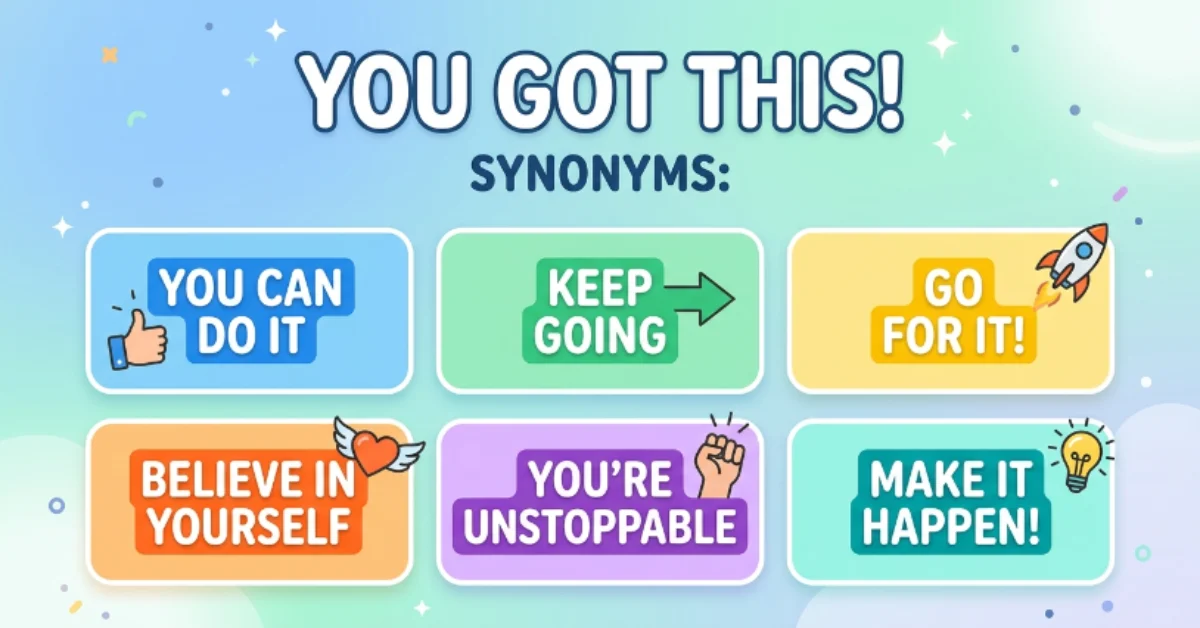
Looking for another way to say “you got this”? Whether you’re encouraging a friend before an exam, motivating a coworker, or cheering someone on before a big event, there are plenty of natural alternatives.
This guide covers the best expressions, explains when to use each one, and includes examples so you can choose the right words with confidence.
Alternatives to “You Got This” at a Glance
| If you want to sound… | Try saying… |
|---|---|
| Friendly | You can do it |
| Supportive | I believe in you |
| Professional | I know you’ll do great |
| Motivational | Keep going |
| Reassuring | You’ll be fine |
| Confident | You’re ready |
| Casual | Go for it |
| Encouraging | You’ve got what it takes |
What Does “You Got This” Mean?
“You got this” is an informal expression used to encourage someone before a challenge. It tells them you believe they have the skills, confidence, or determination to succeed.
Best Alternatives to “You Got This”
Below are given some of the best other ways to say this.
You Can Do It
Meaning: A simple way to encourage someone to keep believing in themselves.
Best used when: Encouraging friends, family, students, or teammates.
Common situations
- Before an exam
- Before a competition
Examples
- You can do it! I know you’ve prepared well.
- Don’t worry—you can do it.
I Believe in You
Meaning: Shows confidence in someone’s abilities.
Best used when: Offering emotional support or motivation.
Common situations
- Before an interview
- During a difficult time
Examples
- I believe in you, no matter what happens.
- Remember, I believe in you completely.
Go for It
Meaning: Encourages someone to take action without hesitation.
Best used when: Someone is unsure whether to try something.
Common situations
- Applying for a job
- Starting a new project
Examples
- If that’s what you want, go for it.
- You’ve worked hard—go for it!
You’re Ready
Meaning: Reassures someone that they’re well prepared.
Best used when: Someone feels nervous before an important event.
Common situations
- Exams
- Presentations
Examples
- You’ve practiced enough—you’re ready.
- Trust yourself. You’re ready for this.
Keep Going
Meaning: Encourages someone to continue without giving up.
Best used when: Someone is already making progress.
Common situations
- Fitness goals
- Long-term projects
Examples
- Keep going—you’re almost there.
- You’re making great progress. Keep going!
I Know You’ll Do Great
Meaning: Expresses confidence that someone will succeed.
Best used when: Offering encouragement in professional or academic settings.
Common situations
- Job interviews
- Important meetings
Examples
- I know you’ll do great in your interview.
- Don’t stress—I know you’ll do great.
You’ll Be Fine
Meaning: Reassures someone who feels anxious or worried.
Best used when: Calming nerves before an event.
Common situations
- Public speaking
- First day at work
Examples
- Relax. You’ll be fine.
- Just be yourself—you’ll be fine.
You’ve Got What It Takes
Meaning: Tells someone they already have the skills needed to succeed.
Best used when: Building someone’s confidence.
Common situations
- Career goals
- Sports competitions
Examples
- You’ve got what it takes to become a great leader.
- Believe in yourself—you’ve got what it takes.
Trust Yourself
Meaning: Encourages someone to have confidence in their own judgment.
Best used when: Someone is doubting themselves.
Common situations
- Making decisions
- Taking exams
Examples
- Trust yourself. You’ve prepared for this moment.
- Take a deep breath and trust yourself.
You’ve Prepared for This
Meaning: Reminds someone that their hard work has already set them up for success.
Best used when: Encouraging someone before an important challenge.
Common situations
- Exams
- Competitions
Examples
- Don’t panic—you’ve prepared for this.
- Remember all the practice you’ve done. You’ve prepared for this.
Believe in Yourself
Meaning: Encourages someone to have confidence in their own abilities.
Best used when: Someone is feeling uncertain or lacking confidence.
Common situations
- Before an exam
- Before a big decision
Examples
- Believe in yourself—you’re more capable than you think.
- Everything starts when you believe in yourself.
Stay Strong
Meaning: Encourages someone to remain resilient during a difficult time.
Best used when: Offering emotional support.
Common situations
- Personal challenges
- Recovery or setbacks
Examples
- Stay strong. Better days are ahead.
- We’re all here for you, so stay strong.
Don’t Give Up
Meaning: Motivates someone to keep trying despite difficulties.
Best used when: Someone is thinking about quitting.
Common situations
- Learning a new skill
- Long-term goals
Examples
- Don’t give up—you’re closer than you realize.
- Success takes time, so don’t give up.
Give It Your Best Shot
Meaning: Encourages someone to try their hardest.
Best used when: The outcome is uncertain but effort matters most.
Common situations
- Job interviews
- Competitions
Examples
- Just give it your best shot.
- Whatever happens, give it your best shot and be proud.
Make It Happen
Meaning: Encourages someone to take action and achieve their goal.
Best used when: Motivating someone to stop hesitating.
Common situations
- Business goals
- Personal ambitions
Examples
- You have a great idea—make it happen.
- This is your opportunity, so make it happen.
One Step at a Time
Meaning: Reminds someone to focus on small, manageable steps.
Best used when: A task feels overwhelming.
Common situations
- Large projects
- Personal challenges
Examples
- Just take it one step at a time.
- You’ll get there one step at a time.
Keep Your Head Up
Meaning: Encourages someone to stay positive after disappointment.
Best used when: Someone has experienced a setback.
Common situations
- Failing an exam
- Losing a competition
Examples
- Keep your head up—this isn’t the end.
- Things will improve, so keep your head up.
You’re Going to Crush It
Meaning: Expresses strong confidence that someone will succeed.
Best used when: Encouraging friends or colleagues in informal situations.
Common situations
- Presentations
- Interviews
Examples
- You’re going to crush it tomorrow.
- Relax—you’ll crush it.
Note: This phrase is informal and best suited for casual conversations.
Own It
Meaning: Encourages someone to be confident and fully embrace the moment.
Best used when: Someone needs a confidence boost.
Common situations
- Public speaking
- Performances
Examples
- Walk on stage and own it.
- You’ve earned this opportunity—own it.
I’m Rooting for You
Meaning: Lets someone know you’re supporting them.
Best used when: Offering encouragement from a distance.
Common situations
- Exams
- Sports
- New jobs
Examples
- I’m rooting for you every step of the way.
- Good luck tomorrow—I’m rooting for you.
You’ve Earned This
Meaning: Reminds someone that their hard work deserves success.
Best used when: Celebrating preparation and dedication.
Common situations
- Promotions
- Graduations
Examples
- You’ve worked so hard—you’ve earned this.
- Enjoy the moment because you’ve earned it.
Give It Everything You’ve Got
Meaning: Encourages someone to put in their maximum effort.
Best used when: The outcome depends on commitment and determination.
Common situations
- Sports
- Competitions
- Final exams
Examples
- Go out there and give it everything you’ve got.
- Whatever happens, give it everything you’ve got.
Knock ‘Em Dead
Meaning: A humorous way to wish someone outstanding success.
Best used when: Encouraging someone before a performance or presentation.
Common situations
- Theater performances
- Job interviews
- Speeches
Examples
- Knock ’em dead in your presentation!
- You’ll be amazing—knock ’em dead.
Note: Despite the wording, this expression has a positive meaning.
Break a Leg
Meaning: A traditional way of wishing someone good luck before a performance.
Best used when: Someone is acting, singing, dancing, or performing on stage.
Common situations
- Plays
- Concerts
- Auditions
Examples
- Break a leg tonight!
- Everyone’s excited to see you perform. Break a leg!
Note: This phrase is mainly used in theater and performing arts.
Best of Luck
Meaning: A polite way to wish someone success.
Best used when: You want a simple and respectful expression.
Common situations
- Exams
- Interviews
- New jobs
Examples
- Best of luck with your interview.
- Wishing you the best of luck on your first day.
Alternatives by Situation
Sometimes the best alternative to “you got this” depends on who you’re talking to. These suggestions help you choose a phrase that sounds natural in different situations.
Before an Exam
If someone is nervous before a test, these expressions sound supportive without adding pressure.
- You’ve prepared for this.
- I believe in you.
- Trust yourself.
- You’ll do great.
- Just do your best.
Before a Job Interview
Professional encouragement should sound confident but sincere.
- I know you’ll do great.
- You’re ready.
- Go show them what you can do.
- You’ve got what it takes.
- Best of luck!
Before a Presentation
Help someone feel calm and confident.
- You’ve got this covered.
- Own it.
- You’ll be fine.
- Take your time.
- You’re ready.
Before a Sports Competition
Motivational phrases work best before a game or race.
- Go for it!
- Give it everything you’ve got.
- You’ve trained for this.
- Go win this.
- You’ve got what it takes.
During a Difficult Time
Sometimes people need encouragement more than motivation.
- Stay strong.
- Keep your head up.
- Take it one step at a time.
- Don’t give up.
- I’m rooting for you.
In a Text Message
These alternatives sound natural in texts and chats.
- You’ve got this 💪
- I believe in you!
- Go for it!
- You’ll do amazing!
- You’ve worked hard for this.
- Can’t wait to hear how it goes!
- I’m rooting for you.
- You’re going to crush it!
Formal Ways to Say “You Got This”
If you’re encouraging a colleague, employee, client, or student, these options sound more professional.
- I know you’ll do well.
- I have every confidence in you.
- You’re well prepared.
- I wish you every success.
- I’m confident you’ll handle it well.
- You have the skills to succeed.
- Best wishes for your presentation.
- I know you’ll do an excellent job.
Funny Ways to Say “You Got This”
When you’re talking to friends or family, a little humor can help reduce stress.
- Go show them who’s boss.
- Time to work your magic.
- Go knock their socks off.
- You’re going to crush it.
- You’ve got this in the bag.
- Don’t forget us when you’re famous.
- Just don’t trip on the way in.
- Make it look easy!
Commonly Confused Encouragement Phrases
“You Got This” vs. “You Can Do It”
- You got this expresses confidence that someone is already capable.
- You can do it focuses on encouraging someone to try.
Example
- You’ve got this. I know you’re ready.
- You can do it. Just keep trying.
“I Believe in You” vs. “Good Luck”
These expressions aren’t interchangeable.
- I believe in you shows confidence in the person.
- Good luck wishes them success.
Example
- I believe in you because you’ve worked hard.
- Good luck with your interview tomorrow!
“You’re Ready” vs. “You’ll Be Fine”
- You’re ready emphasizes preparation.
- You’ll be fine helps calm someone’s nerves.
FAQs
What can I say instead of “you got this”?
Popular alternatives include I believe in you, you can do it, you’re ready, go for it, and you’ve got what it takes.
Is “you got this” grammatically correct?
It’s an informal expression. In formal writing, you’ve got this or another encouraging phrase is usually preferred.
What’s a professional way to say “you got this”?
Try I know you’ll do well, you’re well prepared, or I’m confident you’ll succeed.
Can I say “you got this” in a work email?
Yes, if your workplace has a casual culture. For formal communication, choose a more professional alternative.
What’s the difference between “you got this” and “good luck”?
You got this expresses confidence in someone’s ability, while good luck simply wishes them success.
Is “you got this” appropriate before an exam?
Yes. It’s one of the most common ways to encourage students before exams, interviews, presentations, or competitions.
Editor’s Picks
If you’re not sure which phrase to choose, these are the most natural alternatives.
| Situation | Best Alternative |
|---|---|
| Best overall | I believe in you |
| Friend | You can do it |
| Coworker | I know you’ll do great |
| Student | You’ve prepared for this |
| Interview | You’re ready |
| Presentation | Own it |
| Tough times | Stay strong |
| Sports | Give it everything you’ve got |
Final Thoughts
While “you got this” is a great way to encourage someone, it isn’t the only option. Whether you want to sound more professional, supportive, motivating, or casual, choosing the right phrase can make your encouragement feel more personal and meaningful.
The best expression is the one that fits the moment—and lets the other person know you genuinely believe in them.
Related Blogs: